
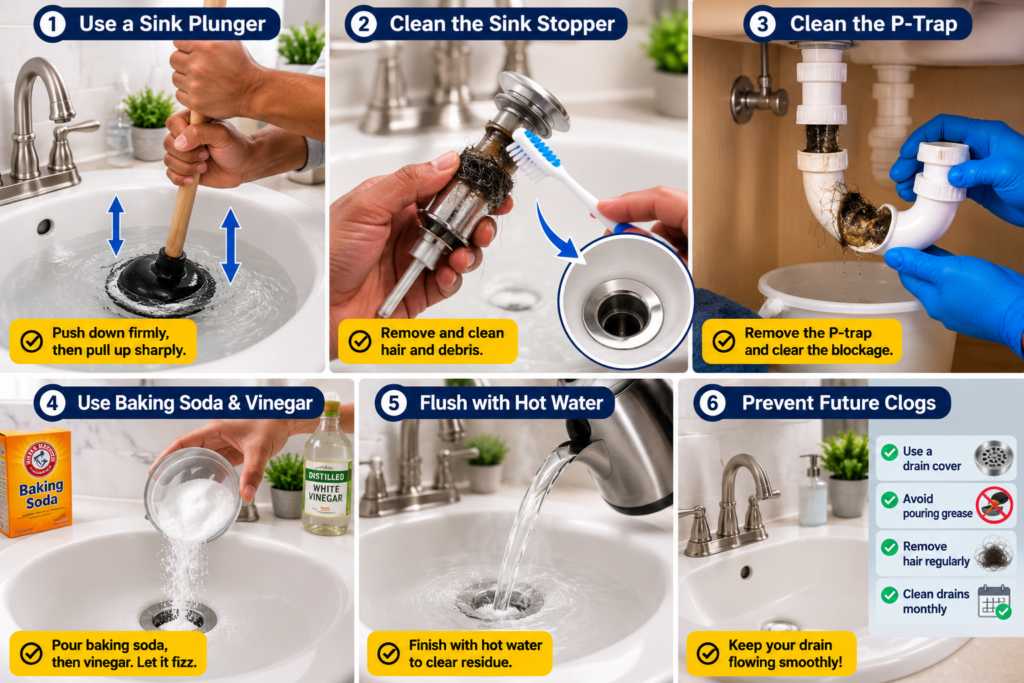
A bathroom sink that won’t drain can quickly turn a simple morning routine into a frustrating problem. Hair, soap residue, toothpaste, beauty products, and other debris can gradually build up inside the drain and slow the flow of water—or stop it completely.
The good news is that many clogged bathroom sinks can be cleared at home without immediately calling a plumber. In this guide, you’ll learn how to unclog a bathroom sink step by step, starting with the simplest methods and moving to more involved solutions if the blockage persists.
Quick tip: If your sink is completely full of standing water, remove as much of the water as possible with a cup or small container before trying the methods below.
Table of Contents
What Causes a Bathroom Sink to Clog?
Bathroom sink clogs usually develop gradually. Unlike kitchen sinks, where food and grease are common problems, bathroom drains often become blocked by hair, soap residue, toothpaste, shaving products, skin-care products, and other debris. Over time, these materials can collect around the drain stopper and inside the pipe, restricting the flow of water.
If your sink has been draining more slowly than usual, that is often an early warning that buildup is forming and should be cleared before the drain becomes completely blocked.
Method 1: How to Unclog a Bathroom Sink by Checking and Cleaning the Drain Stopper”
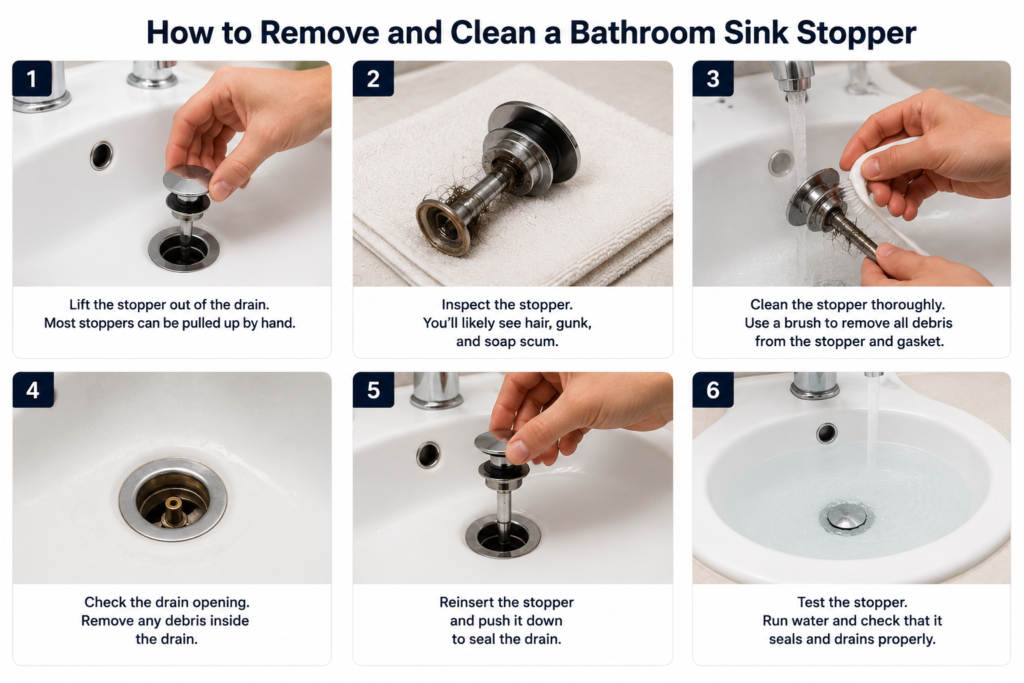
One of the easiest places to start is the drain stopper. Hair, soap residue, toothpaste, and other debris often collect around or underneath the stopper and can prevent water from draining properly.
Step 1: Remove the stopper. Depending on your sink, you may be able to lift or twist the stopper out. Some pop-up stoppers are connected to a pivot rod underneath the sink and may require you to loosen the retaining nut before removing them.
Step 2: Remove visible debris. Pull away any hair, soap buildup, or other material attached to the stopper or sitting near the drain opening. Wear gloves if necessary.
Step 3: Clean the stopper. Wash it with warm water and dish soap. An old toothbrush can help remove buildup from small areas.
Step 4: Check inside the drain. Use a flashlight to look into the drain opening. If you can see hair or debris close to the surface, carefully remove it with a plastic drain-cleaning tool or similar non-sharp tool.
Step 5: Test the sink. Reinstall the stopper and run warm water. If the water now drains normally, you may have solved the problem. If it is still slow or completely blocked, continue to the next method.
Method 2: Try a Sink Plunger
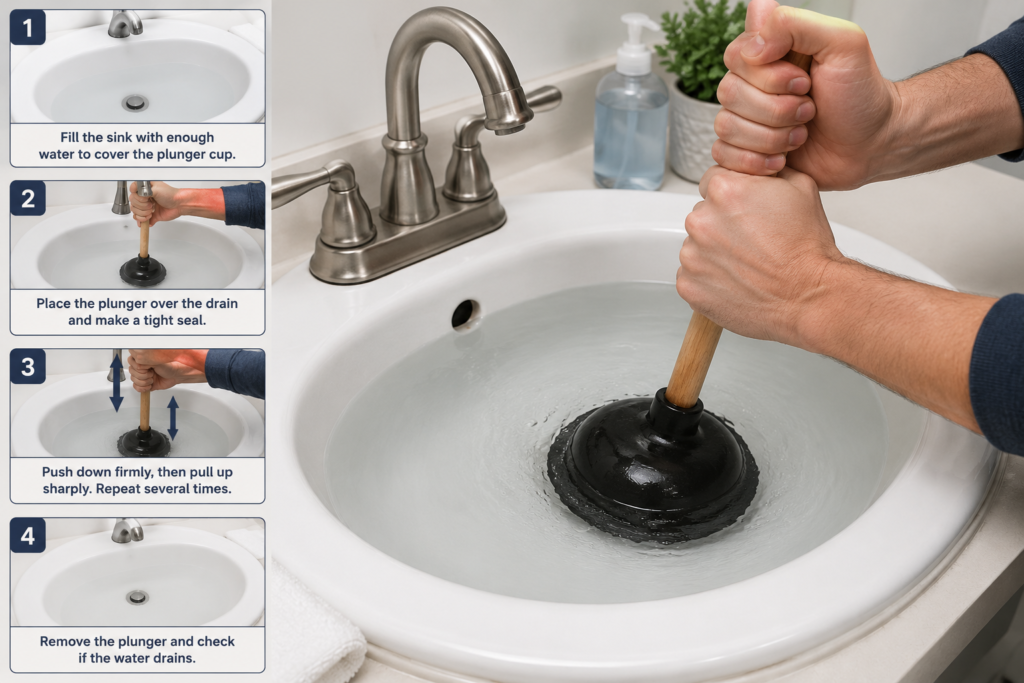
A plunger can sometimes dislodge a clog that is sitting farther down the drainpipe. For a bathroom sink, a small flat-bottomed sink plunger works best.
First, add enough water to the sink to cover the rubber portion of the plunger. If your sink has an overflow opening near the top of the basin, cover it firmly with a wet cloth so the plunger can create better pressure.
Place the plunger directly over the drain to form a tight seal. Push and pull firmly several times, then remove the plunger and see whether the water begins to drain. You may need to repeat the process a few times.
Important: If you have already poured a commercial chemical drain cleaner into the sink, avoid plunging it because the chemical could splash back onto your skin or eyes.
Method 3: Use a Plastic Drain Snake
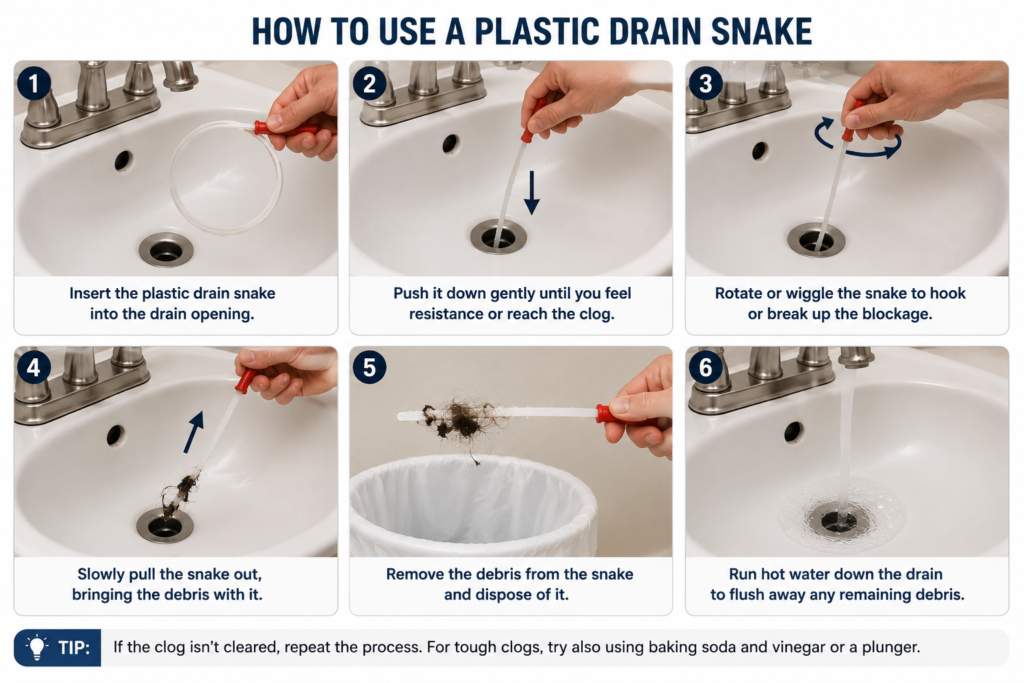
If plunging does not clear the sink, the blockage may be caused by hair and debris trapped deeper inside the drain. A simple plastic drain snake can often reach material that you cannot remove from the drain opening.
Step 1: Remove the drain stopper if necessary. This gives you better access to the drain.
Step 2: Insert the drain snake slowly. Feed the plastic tool into the drain until you encounter resistance. Do not force it aggressively.
Step 3: Pull the snake back out. The small barbs on the tool may catch hair, soap residue, and other debris. Remove the collected material and dispose of it in the trash rather than washing it back down the drain.
Step 4: Repeat if necessary. You may need to insert the tool several times to remove most of the buildup.
Step 5: Flush with warm water. Once the debris has been removed, run warm water for a minute and check whether the sink drains normally.
Method 4: Clean the P-Trap
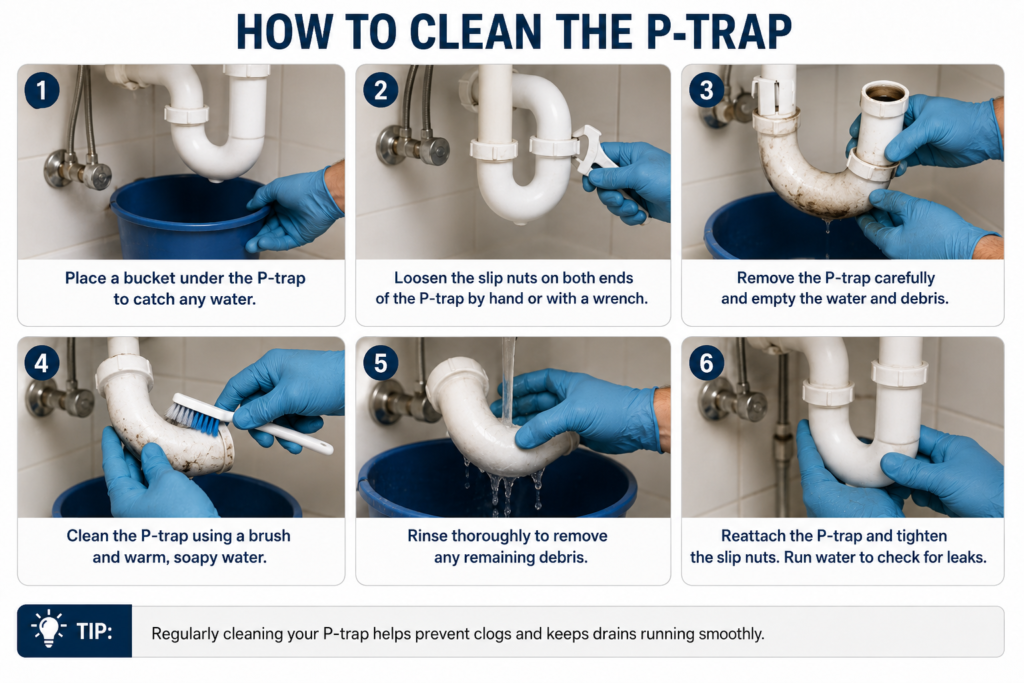
If the sink is still clogged, the blockage may be inside the curved pipe underneath the sink known as the P-trap. This section of plumbing holds a small amount of water to help prevent sewer gases from entering your home, but it can also collect hair, sludge, and other debris.
Before beginning, place a bucket or bowl underneath the P-trap because water will likely spill out when it is disconnected.
If the slip nuts can be loosened safely by hand or with appropriate pliers, carefully remove the P-trap and allow the water to drain into the bucket. Clear out any debris, rinse the trap, and reinstall it securely.
After reconnecting everything, run the faucet briefly while watching the connections underneath the sink. If you notice dripping, turn off the water and check the connections before continuing to use the sink.
If the plumbing is corroded, damaged, difficult to remove, or you are uncomfortable disconnecting it, contact a qualified plumber instead.
What About Baking Soda and Vinegar?
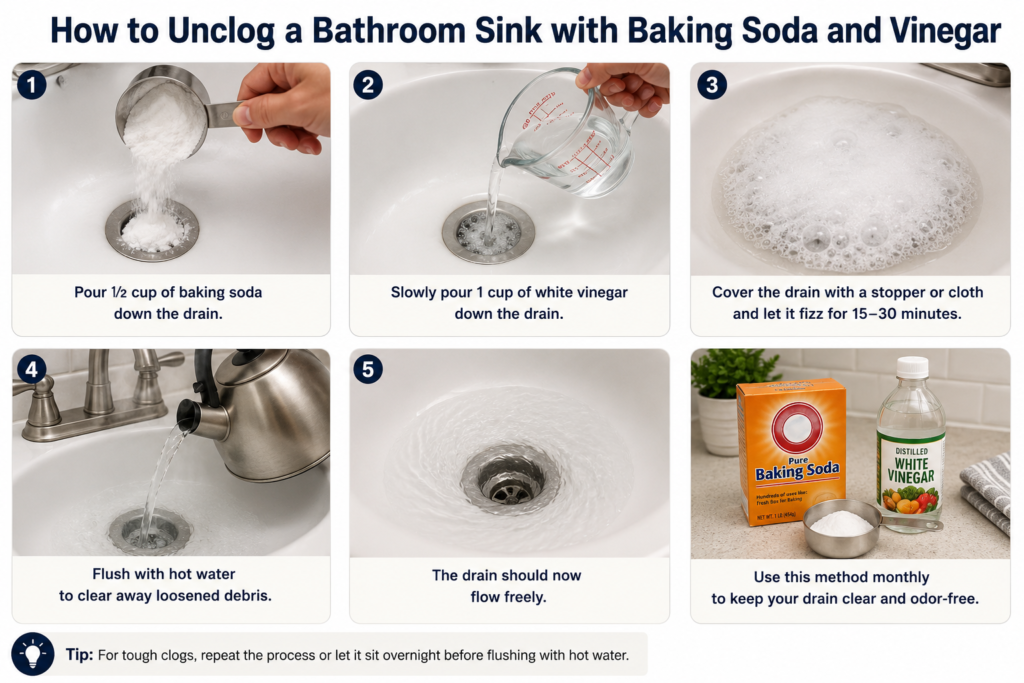
Baking soda and vinegar are frequently recommended as a homemade drain-cleaning solution. The bubbling reaction may help loosen some light residue, but it should not be relied upon to remove a substantial hair clog or serious blockage.
Mechanical methods—such as cleaning the stopper, plunging, using a drain snake, or removing debris from the P-trap—are generally more direct ways to address common bathroom sink clogs.
Never mix different drain-cleaning chemicals or combine household cleaners such as bleach with other cleaning products. Dangerous fumes or reactions can result.
When Should You Call a Plumber?
Most minor bathroom sink clogs can be handled with basic household tools. However, some drainage problems indicate a blockage or plumbing issue that may require professional attention.
Consider contacting a qualified plumber if:
- The sink remains clogged after trying the basic methods above.
- Water backs up into another sink, bathtub, or shower.
- Several drains in your home are draining slowly at the same time.
- You notice persistent sewage or foul odors coming from the drain.
- Water is leaking underneath the sink.
- The pipes appear damaged, badly corroded, or loose.
- The clog repeatedly returns after being cleared.
Multiple clogged drains can sometimes indicate a problem farther down the plumbing system rather than a blockage limited to one bathroom sink.
How to Prevent Your Bathroom Sink From Clogging Again
Once your sink is draining properly, a few simple habits can help reduce future clogs.
Use a drain catcher. A small drain screen can catch hair and larger debris before they enter the plumbing.
Remove visible hair regularly. Do not allow hair to accumulate around the stopper or drain opening.
Avoid washing inappropriate materials down the sink. Cotton swabs, dental floss, wipes, paper products, and similar items should go into the trash.
Clean the stopper periodically. Soap residue, toothpaste, hair, and grime often accumulate underneath it.
Pay attention to slow drainage. A sink that gradually begins draining more slowly may be developing a blockage. Addressing it early can be easier than waiting until the drain becomes completely clogged.
Frequently Asked Questions
What is the fastest way to unclog a bathroom sink?
Start by checking the drain stopper for visible hair and debris. If that does not solve the problem, try plunging the sink or using a plastic drain snake. The best method depends on where the blockage is located.
Why is my bathroom sink draining slowly but not completely clogged?
A slowly draining sink often means material is gradually accumulating inside the drain. Hair, soap residue, toothpaste, and other debris can restrict water flow before the pipe becomes completely blocked.
Can I use boiling water in my bathroom sink?
Very hot or boiling water is not appropriate for every plumbing system and may potentially damage certain pipes, seals, or sink materials. Warm or appropriately hot tap water is generally a more cautious choice unless you know your plumbing materials can safely tolerate higher temperatures.
Why does my bathroom sink keep clogging?
Recurring clogs may result from repeated hair and product buildup, debris remaining deeper in the drain, or another plumbing problem. If you repeatedly clear the sink but the problem quickly returns, professional inspection may be worthwhile.
Can I unclog a bathroom sink without chemicals?
Yes. Many common bathroom sink clogs can be addressed mechanically by cleaning the stopper, using a plunger, removing hair with a plastic drain snake, or cleaning the P-trap.
Final Thoughts
Knowing how to unclog a bathroom sink can help you handle common clogs quickly before they become bigger plumbing problems. A clogged bathroom sink does not always require harsh chemicals or an immediate service call. Start with the simplest solution: remove visible debris and clean the stopper. If necessary, move on to plunging, using a drain snake, and checking the P-trap.
If the blockage persists, repeatedly returns, causes leaks, or affects multiple drains, it may be time to contact a qualified plumber.
Taking care of small drainage problems early and keeping hair and debris out of the drain can help your bathroom sink continue flowing properly
Learning how to unclog a bathroom sink can save you time and money when you’re dealing with a simple clog caused by hair, soap residue, or everyday buildup.